Maryland residents are rethinking how they approach preventive health. Whether you're commuting from Columbia, managing a packed schedule in Baltimore, or balancing family routines in Annapolis, finding time for in-person medical visits can feel like a luxury. That's exactly why telehealth has become a practical path for people seeking GLP-1 medications in Maryland. These treatments, originally developed for type 2 diabetes, have proven effective for weight management and metabolic health. For busy professionals, parents, and anyone prioritizing long-term wellness, virtual care removes the friction of traditional appointments. You don't need to rearrange your day. You need a licensed clinician, a structured plan, and a way to get started from wherever you are.
GLP-1 Medications in MD
What Are GLP-1 Medications?
GLP-1 receptor agonists mimic a hormone your body naturally produces after eating. This hormone signals your brain to feel full, slows gastric emptying, and helps regulate blood sugar. The result is reduced appetite and more consistent energy throughout the day.
Two of the most commonly prescribed GLP-1 medications are semaglutide and tirzepatide. Semaglutide, the active compound in drugs like Ozempic and Wegovy, has been widely studied for both diabetes management and weight loss. Tirzepatide, marketed as Mounjaro, targets two receptors instead of one, offering a dual mechanism that some patients respond to more favorably.
These aren't quick fixes. They're clinically supported tools that work best alongside dietary changes, movement, and ongoing medical oversight.
Maryland's geography creates unique challenges. The state stretches from dense urban corridors to rural communities on the Eastern Shore. Commuters in the Baltimore-Washington metro area often spend over an hour each way getting to work. Squeezing a doctor's visit into that kind of schedule isn't always realistic.
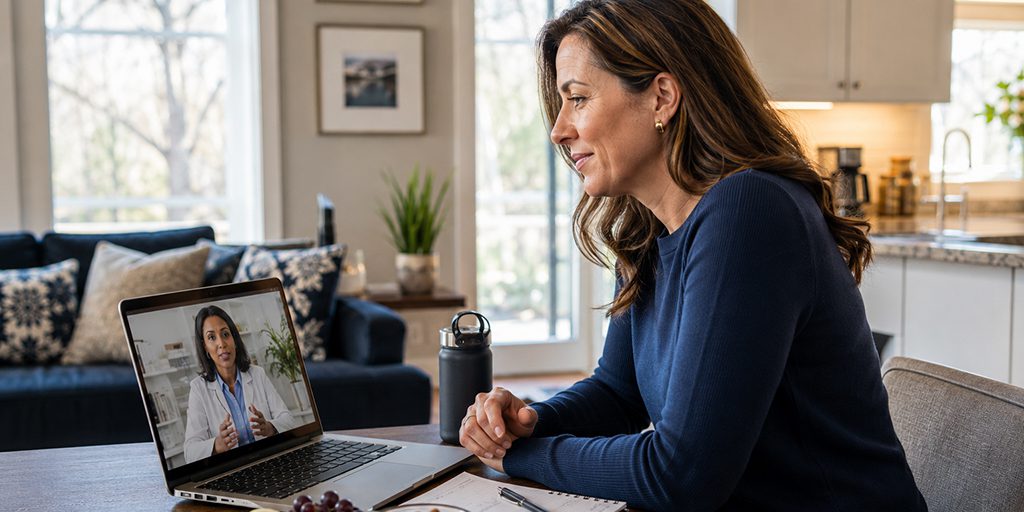
Telehealth eliminates the commute entirely. You consult with a licensed provider from your home, your office, or wherever you have a few minutes of privacy. For people in Columbia or Annapolis who already spend significant time on the road, this is a meaningful difference.
Maryland has strong telehealth regulations that protect patients. Providers must hold valid MD licenses, and prescriptions must follow the same clinical protocols as in-person visits. Virtual care isn't a shortcut. It's a parallel path with identical standards.
Personalized Compounded GLP-1
Looking for Semaglutide or Tirzepatide? Start your free assessment now!
How the Process Works
Getting GLP-1 medications through telehealth in Maryland typically follows a straightforward sequence.
- Initial consultation: You complete a health questionnaire and meet with a licensed clinician via video or secure messaging. They review your medical history, current medications, and weight management goals.
- Clinical evaluation: The provider determines whether a GLP-1 medication is appropriate for you. Not everyone qualifies. BMI thresholds, existing conditions, and contraindications all factor into the decision.
- Prescription and pharmacy: If approved, your prescription is sent to a pharmacy with direct oversight. Some telehealth platforms work with specific pharmacy partners to maintain quality controls and batch testing.
- Ongoing monitoring: Dosing adjustments, side effect management, and progress check-ins happen through scheduled follow-ups. This isn't a one-and-done prescription.
Trava, a clinician-guided telehealth company, follows this kind of structured approach. Their model pairs licensed providers with pharmacy oversight and transparent pricing, so you know exactly what you're paying and what to expect at each step.
Choosing Between Semaglutide and Tirzepatide
Your provider will help determine which medication fits your situation. Here's a general comparison.
Semaglutide has a longer track record and more published research behind it. It's typically administered as a weekly injection and has well-documented effects on appetite suppression and A1C reduction. Many patients start here because clinicians are deeply familiar with its dosing protocols.
Tirzepatide is newer but has shown strong results in clinical trials, sometimes outperforming semaglutide in head-to-head studies for weight loss. It targets both GIP and GLP-1 receptors, which may explain the enhanced response some patients experience. It's also a weekly injection.
Neither option is universally "better." Your metabolic profile, medical history, and treatment goals all shape the recommendation. A responsible provider won't push one over the other without clinical justification.
What to Look for in a Telehealth Provider
Not all telehealth platforms operate the same way. Some prioritize speed and volume. Others prioritize clinical accountability. The difference matters when you're talking about prescription medications that affect your metabolic system.
Here's what to evaluate:
- Licensed clinicians in your state: Confirm that the provider holds an active Maryland license. This isn't optional. It's a legal requirement.
- Pharmacy partnerships: Ask how medications are sourced. Are they compounded? Are they brand-name? Is there batch testing? These details affect both safety and efficacy.
- Transparent pricing: Watch for hidden fees. Some platforms advertise low consultation costs but charge separately for follow-ups, shipping, or dosing adjustments.
- Ongoing support: A prescription without follow-up care is incomplete. Look for providers who build check-ins into the treatment plan.
Trava's model addresses several of these concerns directly. Their care teams stay involved beyond the initial prescription, offering guidance on side effects, dosing changes, and long-term planning. Real people answer the phone. That's not a small thing in telehealth.
Managing Expectations and Side Effects
GLP-1 medications work. But they come with a learning curve. Common side effects include nausea, constipation, and reduced appetite that can feel more intense than expected during the first few weeks. Most of these effects diminish as your body adjusts and your dose stabilizes.
Staying hydrated, eating smaller meals, and communicating openly with your provider all help. If side effects persist or worsen, your clinician can adjust the dose or explore alternatives.
Weight loss timelines vary. Some patients see noticeable changes within the first month. Others take longer. The goal isn't rapid loss. It's sustainable progress supported by clinical oversight.
Fitting Treatment into a Maryland Lifestyle
Suburban routines in places like Columbia or Severna Park revolve around work, school schedules, and weekend errands. Adding a recurring medical appointment to that mix creates friction. Telehealth removes it.
You can complete a follow-up during your lunch break. You can message your care team while waiting at school pickup. The flexibility doesn't compromise quality. It simply meets you where your life actually happens.
For professionals in Baltimore's downtown corridor or government workers commuting to D.C., this flexibility is even more valuable. You don't lose half a day to a 15-minute appointment.
Preventive health shouldn't require heroic scheduling efforts. GLP-1 treatment through telehealth in Maryland fits into the life you already have.

Frequently Asked Questions
Do I need a referral to get GLP-1 medications through telehealth in Maryland?
No. Most telehealth platforms that prescribe GLP-1 medications don't require a referral from your primary care physician. You'll go through a clinical evaluation directly with a licensed provider on the platform. They'll review your health history, assess your eligibility, and determine whether a GLP-1 medication is appropriate. That said, it's always wise to inform your primary care doctor about any new prescriptions so your overall care stays coordinated.
Are GLP-1 medications covered by insurance in Maryland?
Coverage depends on your specific plan. Some Maryland insurers cover semaglutide or tirzepatide for type 2 diabetes but not for weight management. Others offer partial coverage with prior authorization. Many patients using telehealth platforms like Trava choose self-pay options because the pricing is predictable and doesn't involve surprise denials or lengthy approval processes. If cost is a concern, ask your provider about compounded formulations, which can be more affordable while still meeting quality standards.
How quickly can I start treatment after my first telehealth visit?
Most patients receive a prescription within a few days of their initial consultation, assuming they qualify. The exact timeline depends on the provider's review process and pharmacy fulfillment. Some platforms ship medications directly to your door, which eliminates another step. You won't wait weeks, but don't expect same-day prescriptions either. Responsible prescribing involves a thorough review, not a rubber stamp.
Is telehealth for GLP-1 medications safe and legitimate?
Yes, provided you use a platform with licensed clinicians and proper pharmacy oversight. Maryland requires telehealth providers to hold active state licenses and follow the same prescribing standards as in-person practices. Look for platforms that are transparent about their clinical protocols, pharmacy sourcing, and quality controls. A trustworthy provider will welcome your questions about these details rather than deflect them.
Can I switch from semaglutide to tirzepatide during treatment?
Switching medications is possible and sometimes recommended. If you're not responding well to semaglutide or experiencing persistent side effects, your provider may suggest tirzepatide as an alternative. The transition requires medical oversight to manage dosing and monitor your response. Don't make this change on your own. Your clinician will guide the timing and approach based on your progress and health data.
Conclusion
Getting GLP-1 medications in Maryland doesn't have to involve long waits, complicated scheduling, or confusing pricing. Telehealth has made it possible to connect with licensed clinicians, receive a thorough evaluation, and start treatment without leaving your home or office.
The key is choosing a provider that prioritizes clinical accountability over convenience alone. Structured care, pharmacy oversight, and ongoing support matter more than speed. Trava was built around these principles: real clinicians, transparent costs, and a care team that stays present throughout your treatment.
If you're in Baltimore, Annapolis, Columbia, or anywhere else in Maryland, your next step is simpler than you might think. A short consultation can help you understand whether a GLP-1 medication fits your health goals. You deserve care that's clear, responsive, and designed around your actual life. Start where you are, and build from there.
Disclaimer: TRAVA is not affiliated with, Mounjaro, Ozempic, Rybelsus, Saxenda, Trulicity, Wegovy, or Zepbound. However, we do offer alternatives such as Semaglutide and Tirzepatide. Before beginning any treatment, it's essential to consult with a licensed healthcare provider to ensure the best approach for your individual health needs.