You’re standing in the pharmacy aisle, or scrolling late at night, looking at a familiar orange box and wondering where it fits in a world now crowded with weight loss shots, metabolism talk, and endless “hacks.” That’s a reasonable question.
A lot of adults asking how does Alli work aren’t just casually curious. They’ve already tried diets, maybe tracked macros, maybe watched friends start GLP-1 medications, and they want something science-backed that’s still simple enough to fit real life. They don’t want hype. They want a clear answer.
Alli is one of the few weight loss products with a very specific, easy-to-explain mechanism. It doesn’t try to suppress appetite. It doesn’t act like a stimulant. It works in your digestive tract, where it blocks part of the fat you eat from being absorbed.
That sounds straightforward, but people often get stuck on the practical details. How much does it help? What does “blocks fat” mean in real life? Why do side effects happen? And how does an older over-the-counter option make sense in a modern environment that includes prescription treatments like semaglutide and tirzepatide?
Navigating Modern Weight Loss Options
A common scene today looks like this: one person is reading about weekly injections, another is comparing meal plans, and someone else is holding a box of Alli wondering if a non-prescription option still has a place. It does, but it helps to understand what kind of tool it is.

Why the question feels more complicated now
A decade ago, many people were mostly comparing diet plans or maybe one or two prescription pills. Now the conversation is broader. Some adults want a lower-barrier option they can buy themselves. Others are already familiar with GLP-1 medications and want to know whether Alli is outdated, complementary, or intended for a different kind of weight loss strategy.
That confusion makes sense because these tools work in very different ways. Some treatments affect hunger and fullness signals. Alli doesn’t. It targets digestion.
Bottom line: Alli is best understood as a focused, mechanical tool. It changes what happens to part of the fat in a meal.
Who tends to be curious about Alli
In practice, several kinds of readers ask about it:
- Busy professionals: They want something accessible, concrete, and designed to fit real life.
- People who’ve regained weight before: They often prefer a medication with a clear physical mechanism rather than broad wellness language.
- GLP-1 aware consumers: They may not be ready for prescription treatment, or they want to understand all the categories before talking with a clinician.
- Science-curious readers: They like knowing exactly what a product does, and what it doesn’t do.
Alli has been around long enough that some people assume they already know the story. But the useful part isn’t just “it blocks fat.” The useful part is understanding how that happens, what results are realistic, and why food choices matter so much more with Alli than they do with many other products.
Personalized Compounded GLP-1
Looking for Semaglutide or Tirzepatide? Start your free assessment now!
How Alli Works by Blocking Dietary Fat
You eat a takeout lunch, take Alli with the meal, and wonder what changes after that. The key point is simple. Alli works in your digestive tract, not in your brain. It reduces how much of the fat from that meal gets absorbed.
The simple version
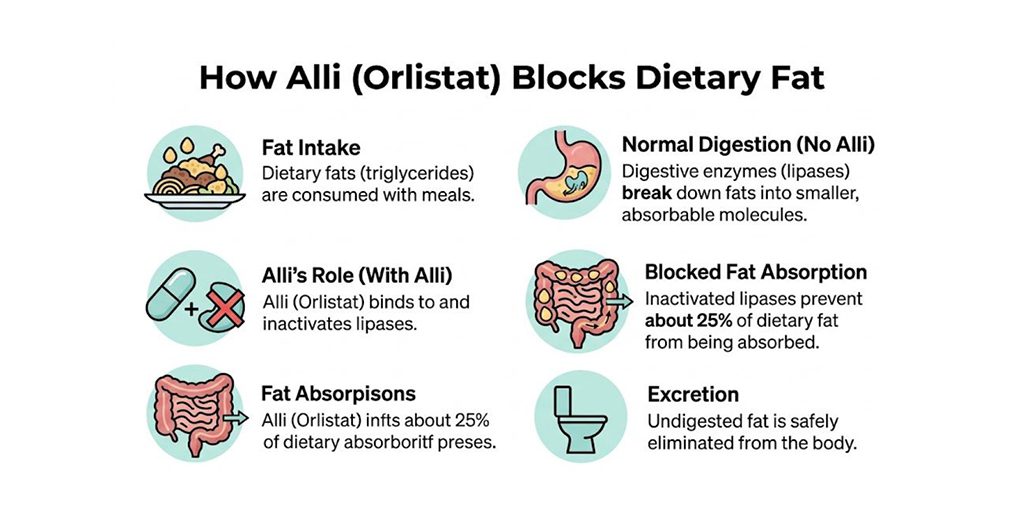
Alli contains orlistat 60 mg. Orlistat blocks some of the lipase enzymes that normally break dietary fat into smaller pieces your body can absorb. If that fat is not broken down well enough, part of it passes through the intestines and leaves the body in stool.
A plumbing comparison helps here. Fat has to be cut into smaller, usable pieces before it can pass through the intestinal wall. Alli partly shuts down the tool that does the cutting. Less cutting means less absorption.
Because fat is calorie-dense, that change can lower the total calories your body takes in from a meal that contains fat.
The more detailed science
Orlistat acts locally in the gastrointestinal tract. It attaches to gastric and pancreatic lipases, the enzymes involved in digesting triglycerides. With some of that enzyme activity blocked, a portion of dietary fat stays undigested instead of being absorbed into the bloodstream.
That mechanism matters in 2026 because many people compare every weight-loss product to GLP-1 drugs. Alli belongs to a different category. GLP-1 medicines mainly affect appetite, fullness, and food intake. Alli mainly affects fat digestion.
So if you are expecting less hunger, fewer cravings, or a dramatic change in how full you feel, that is the wrong mental model for Alli. A better model is mechanical calorie reduction from fat-containing meals.
A visual explanation often helps more than enzyme terms alone.
What that means at mealtime
Meal composition matters a lot with Alli. That is one reason it can feel more demanding in day-to-day life than newer treatments that work through appetite pathways.
Compare two lunches. One has grilled chicken, rice, vegetables, and a small amount of added fat. The other is a burger, fries, and a creamy sauce. Alli affects fat from either meal, but the higher-fat lunch leaves more unabsorbed fat in the gut. For many users, that is where the side-effect problem starts.
This point is easy to misunderstand. Blocking more fat does not automatically make the experience better. In practice, high-fat meals often mean a less comfortable afternoon, not a smarter use of the product.
That is why experienced users often do best when they treat Alli like a product that rewards planning. Reading labels, noticing how much fat is in a restaurant meal, and spreading fat intake more evenly across the day can make a real difference in whether someone sticks with it.
What clinical results tell us
Earlier evidence cited in this article shows that Alli can produce modest added weight loss when paired with a reduced-calorie, lower-fat eating plan and exercise. The practical takeaway is more useful than any single number. Alli can help, but its benefit depends heavily on the eating pattern around it.
That makes Alli different from the way many people talk about GLP-1s. With Alli, food choices are closely tied to both results and tolerability. The same mechanism that reduces fat absorption also explains why lower-fat meals usually make the product easier to live with.
What to Realistically Expect from Alli
A common 2026 scenario looks like this. Someone has heard friends talk about GLP-1 shots, has seen dramatic before-and-after posts online, and then notices Alli on the shelf and wonders whether an over-the-counter pill can do anything meaningful.
It can, but the right expectation is modest, practical progress.
Alli tends to work best for adults who want a non-stimulant oral option and who are comfortable making food changes that match the medication. As noted earlier, the added weight loss is usually best understood as incremental help on top of a reduced-calorie, lower-fat plan. That may sound less exciting than newer medications that affect appetite, but for the right person, steady and manageable is a real advantage.
What success usually looks like
Success with Alli often looks less like a dramatic drop on the scale and more like a pattern you can sustain for months. Your meals become more deliberate. High-fat restaurant choices become less appealing because the downside is immediate. Portions often improve because the medication works best when your eating plan is structured.
That behavior piece matters.
In real life, people often stick with Alli when they stop asking, "How fast will this work?" and start asking, "Can I build a routine I can live with?" A lower-fat breakfast, a packed lunch, and regular activity such as strength training for weight loss often fit that routine better than chasing quick results for two weeks and burning out.
A clinically meaningful result is usually framed in health terms, not cosmetic ones. Even moderate weight loss can support better metabolic health, which is one reason some adults still consider Alli even now, when stronger prescription options get more attention.
A realistic mindset: Alli helps create an edge. It does not replace the basics.
Who Alli tends to fit best
Alli is not a general wellness supplement. It is an over-the-counter medication intended for adults who meet its labeled use, and it has a very specific job.
That narrow job is the point. People who want help with fat-related calorie absorption may find it useful. People who want a medication that noticeably reduces hunger, quiets food noise, or drives larger average losses may feel underwhelmed because Alli does not work through those pathways.
A good fit often looks like this: someone wants to start with the most accessible medication option, prefers to avoid stimulants, and is willing to pay close attention to meal composition. A poor fit often looks different: someone eats many restaurant meals, wants broad appetite control, or expects Alli to behave like a GLP-1.
Expectations that prevent disappointment
A few grounded assumptions make the experience easier to judge fairly:
- Your food pattern still drives the outcome. Alli supports the plan. It does not carry the plan.
- Results usually build slowly. Week-to-week changes may look small, especially compared with newer prescription drugs.
- Meal quality matters as much as the pill. People who do well with Alli usually improve consistency, not just medication use.
- The best outcome may be adherence. If the routine feels livable, modest loss can add up.
One analogy helps here. Alli is closer to a brake on part of dietary fat absorption than to an appetite reset. GLP-1s change the hunger conversation for many patients. Alli changes the consequences of eating higher-fat meals and, for some adults, that creates enough structure to support weight loss.
When Alli may not match your goals
Some adults are looking for stronger help with appetite, a larger expected degree of weight loss, or treatment that also fits conditions such as diabetes or significant obesity. In those situations, Alli may feel too limited.
Limited does not mean useless. It means specific.
Used with the right expectations, Alli can be a reasonable first step or a simpler option for someone who wants to start with an oral, over-the-counter product and understands that success will come from consistent habits, not spectacle.
Using Alli Effectively for Best Results
Using Alli well is less about “taking the pill correctly” and more about building meals that work with it. That’s where many people struggle at first.
The basic routine
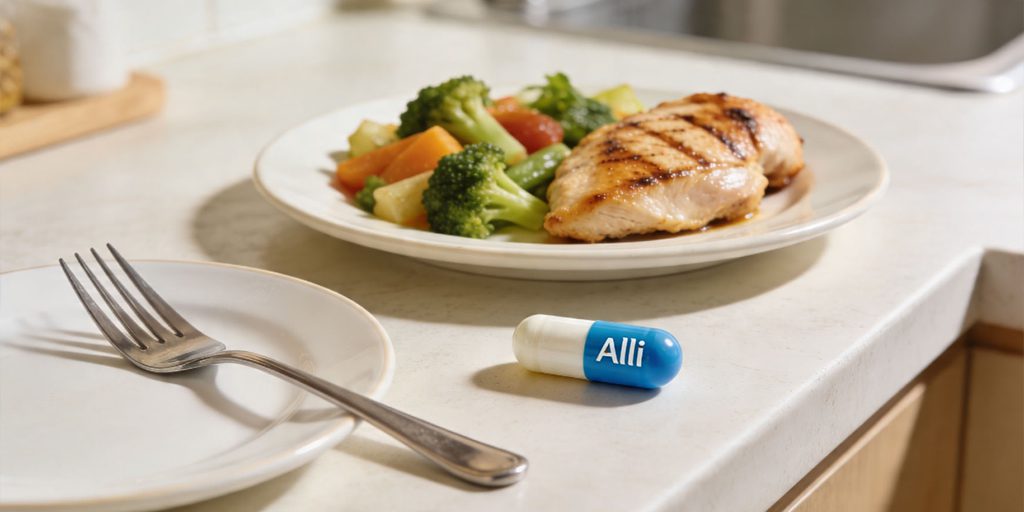
Alli is generally taken with meals that contain fat, up to three times daily. The key phrase is “meals that contain fat.” If a meal has no fat, taking Alli doesn’t add much value.
That sounds easy, but the key skill is meal design. People often do fine at breakfast and lunch, then overload dinner with most of the day’s fat. That’s usually where problems start.
The most important food rule
A detailed mechanism review notes that keeping fat intake under 15 grams per meal helps reduce common gastrointestinal side effects, and that orlistat can lower absorption of fat-soluble vitamins A, D, E, and K, which is why a multivitamin should be taken at least 2 hours apart from an orlistat dose, according to this PubMed-indexed source on orlistat’s mechanism and practical use.
That single threshold, under 15 grams of fat per meal, is one of the most useful practical guidelines for day-to-day success.
Practical rule: Don’t “save up” fat for one meal. Spread it across the day, and keep each meal moderate.
How to make that rule work in real life
For many adults, the challenge isn’t knowing they need a low-fat diet. It’s translating that into ordinary meals on a workday.
A few approaches help:
- Build around lean protein: Chicken breast, fish, low-fat Greek yogurt, tofu, or beans can anchor a meal without pushing fat too high.
- Watch hidden fats: Salad dressings, creamy sauces, nut butters, cheese, pastries, and restaurant oils can turn a reasonable meal into a problem quickly.
- Keep meals balanced, not fat-free: The goal isn’t fear of fat. It’s avoiding a fat-heavy meal that the medication can’t handle comfortably.
- Plan ahead for restaurant food: Ask for sauces and dressings on the side, and pay attention to fried items and large portions.
A plate with grilled chicken, rice, and vegetables usually behaves very differently from a plate of pizza and wings, even if the calories look closer than you’d think.
Don’t skip the vitamin strategy
Because Alli reduces absorption of fat-soluble vitamins, a daily multivitamin isn’t an optional extra. It’s part of using the medication responsibly.
The timing matters too. Taking the vitamin at least two hours apart from Alli helps reduce the chance that the medication will interfere with vitamin absorption. Many people find it easiest to take the vitamin at bedtime if they use Alli with daytime meals.
Pairing Alli with the habits that matter most
Alli works best when the rest of your routine supports it. Protein intake, meal regularity, sleep, and resistance training all shape how sustainable weight loss feels over time. If you’re trying to protect muscle while losing weight, this guide to strength training for weight loss is a smart next step.
A simple starter pattern
If you want a practical way to begin, think in patterns rather than perfect menus:
- Breakfast: Keep it light and structured, such as fruit, oatmeal, and a lean protein.
- Lunch: Choose something predictable, like a grain bowl with lean protein and vegetables.
- Dinner: Avoid turning this into the “cheat meal.” Moderate portions and lower-fat cooking methods matter.
- Vitamin timing: Set one daily reminder so you don’t forget the multivitamin.
People who do well with Alli usually don’t white-knuckle it. They make meals more predictable, and that lowers both calorie intake and side effect risk.
Understanding and Managing Alli Side Effects
Alli’s side effects make much more sense once you connect them directly to the mechanism. The medication blocks part of the fat you eat from being absorbed. That fat has to go somewhere. It leaves through the digestive tract.
That’s why the most common issues are gastrointestinal. They aren’t random. They’re the visible result of unabsorbed fat.
The side effects people notice most
The everyday complaints usually include oily spotting, gas with oily discharge, loose stools, and urgency. People can feel embarrassed by these symptoms, but they’re best understood as feedback. In many cases, the meal was too high in fat for the amount of medication support the body could handle comfortably.
According to WebMD’s overview of Alli, gastrointestinal side effects initially affect over 40% of users, but they often decrease as people adjust their diet. The same source notes that non-adherence can exceed 50%, often because side effects weren’t managed well.
That’s a useful reminder that success with Alli is often less about motivation and more about meal pattern problem-solving.
The side effect is often the clue. If symptoms spike after a meal, the meal usually needs adjusting.
What to do if symptoms show up
When people run into trouble, they often make one of two mistakes. They either quit immediately, or they keep eating the same way and hope the symptoms fade on their own. A better approach is to troubleshoot.
Try asking:
- Was that meal higher in fat than usual?
- Did I eat out and underestimate oils, sauces, or cheese?
- Did I bunch most of my daily fat into one meal?
- Have I been inconsistent, then restarted without adjusting food?
The answer is often yes to one of those.
Practical ways to reduce discomfort
If you want side effects to settle down, precision helps more than vague “healthy eating” advice.
- Choose plainer meals for a few days: Grilled protein, vegetables, fruit, soups, rice, potatoes, and lower-fat yogurt are often easier starting points.
- Be careful with restaurant meals: Even foods that sound healthy can contain a lot of hidden fat.
- Carry a backup plan: If you’re traveling or in long meetings, it may help to avoid risky meals when bathroom access is limited.
- Read labels more closely at first: The learning curve is steepest in the beginning.
Individuals don’t need a perfect diet. They need fewer surprise-fat meals.
When to stop and call a clinician
Common gastrointestinal effects are one thing. More serious or persistent problems deserve medical input.
Stop self-managing and contact a healthcare professional if side effects feel severe, if you’re struggling to eat normally, if you have underlying digestive or absorption concerns, or if you’re taking other medications and aren’t sure how they interact with your plan. It’s also smart to check in if side effects are making adherence impossible, because that usually means the strategy needs adjusting rather than more willpower.
Comparing Alli to Prescription Weight Loss Options
The easiest way to compare weight loss medications is by mechanism, access, and day-to-day use. Alli belongs to a very different category than GLP-1 medications.
Alli and Xenical are closely related
Alli is the over-the-counter form of orlistat 60 mg. Xenical is the prescription-strength 120 mg version of the same active ingredient. That means they share the same core mechanism: blocking fat digestion in the gut.
So if you’ve wondered whether Alli is “like Xenical,” the answer is yes, with a lower dose and over-the-counter availability.
GLP-1 medications work in a different lane
GLP-1 medications such as semaglutide work through hormone-related pathways that influence appetite, fullness, and metabolic regulation. Alli doesn’t work through hunger signals at all. It works in the digestive tract.
That difference changes the user experience. With Alli, meal fat content becomes the central issue. With GLP-1 therapy, the day-to-day conversation often centers more on appetite, fullness, tolerance, and dose titration. If you want a broader overview, this guide to GLP-1 drugs for weight loss gives useful context.
Comparison of Modern Weight Loss Medications
| Attribute | Alli (Orlistat 60mg) | Xenical (Orlistat 120mg) | GLP-1 Agonists (e.g., Semaglutide) |
| How it works | Blocks part of dietary fat absorption in the gut | Same mechanism as Alli, at prescription strength | Affects appetite, fullness, and metabolic signaling |
| How it’s taken | Oral capsule with fat-containing meals | Oral capsule with fat-containing meals | Often prescribed as injections, depending on product |
| Access | Over the counter | Prescription only | Prescription only |
| Main day-to-day focus | Managing dietary fat intake | Managing dietary fat intake | Managing appetite effects, dose tolerance, and nutrition quality |
| Common side effect pattern | GI effects tied closely to higher-fat meals | Similar GI pattern | Often GI-related too, but through a different mechanism |
| Best fit for | Adults who want a non-stimulant OTC option with a clear digestive mechanism | Adults who need prescription oversight for the same core drug approach | Adults seeking prescription metabolic treatment and appetite-related support |
Which one is “better”
That’s usually the wrong question.
A better question is which mechanism matches the person in front of you. Someone who wants a pharmacy-accessible, non-stimulant oral option may value Alli’s simplicity. Someone who needs prescription-level support for appetite regulation may need a different path. Someone else may need an entirely broader medical plan that looks beyond medication alone.
A medication can be scientifically sound and still be the wrong fit for a specific goal, lifestyle, or eating pattern.
The modern weight loss conversation works better when people stop ranking medications like gadgets and start matching them to the problem they’re trying to solve.
Why Partnering with a Clinician Matters
You buy Alli at the pharmacy, read about GLP-1 medications on your phone that night, and by the next morning you have three tabs open and no clear answer. That is a common 2026 problem. Access to more options helps, but it also makes self-screening harder.
A clinician adds context that packaging and social posts cannot. They can look at your health history, usual meals, bowel patterns, current medications, and weight-loss goals as one picture. That matters because the right question is not whether Alli works. The question is whether Alli fits the problem you are trying to solve.
For one person, the main issue may be frequent high-fat convenience meals that make Alli hard to tolerate. For another, appetite may be the bigger driver, which can point the conversation toward prescription options such as GLP-1s. A third person may need neither approach first. They may need a plan that starts with nutrition structure, sleep, or medication review.
When expert input matters most
Getting professional input early makes sense if any of these apply:
- You have a medical condition or take regular medication: Over-the-counter does not mean risk-free for every person.
- Alli side effects are getting in the way: A clinician can help you trace the problem to meal fat content, timing, or whether a different approach fits better.
- You are comparing Alli with prescription treatment: It helps to sort out whether your main challenge is fat intake, hunger, fullness, or a broader metabolic issue.
- You want a plan you can stay with: Long-term success usually comes from matching the treatment to your habits, not forcing your habits around the treatment.
Telehealth has made that kind of guidance easier to get for busy adults. If you want a clearer sense of what telehealth is and how it works, it can help you decide whether virtual care fits your schedule and comfort level.
One more practical point often gets missed. A clinician can help you troubleshoot early, before side effects turn into a reason to quit. With Alli, that may mean reviewing exactly what was in the meals that caused problems, then adjusting fat intake meal by meal instead of giving up on the drug after one rough weekend.
Alli is a reasonable option for some adults. It is also only one tool in a much broader weight-loss field. A clinician helps you choose with more precision, set realistic expectations, and build a plan that works in real life rather than just sounding good on a label.
If you want help sorting through OTC options like Alli, prescription treatments such as GLP-1s, or a broader medically supervised plan, TRAVA offers online access to licensed providers who can help you choose a weight loss strategy that fits real life.
Disclaimer: TRAVA is not affiliated with, Mounjaro, Ozempic, Rybelsus, Saxenda, Trulicity, Wegovy, or Zepbound. However, we do offer alternatives such as Semaglutide and Tirzepatide. Before beginning any treatment, it's essential to consult with a licensed healthcare provider to ensure the best approach for your individual health needs.