
You clean up your meals. You start walking more. Maybe you add Peloton, OrangeTheory, or a few strength classes each week. For a while, you expect the scale to respond the way it used to.
Then it doesn’t.
That experience is one of the main reasons people ask why is it hard to lose weight after 40. The short answer is that your body isn’t working against you because you suddenly lost discipline. It’s responding to a set of real biological and lifestyle changes that become harder to ignore in midlife.
After 40, weight loss often gets more complicated because several things happen at once. Muscle mass tends to decline, resting metabolism slows, hormones shift, sleep gets less reliable, stress piles up, and daily movement often drops without you realizing it. Standard advice like “eat less and move more” can still matter, but it often stops being enough on its own.
The encouraging part is that this problem has an explanation, and that means it also has better solutions. Once you understand what’s changing, you can stop treating midlife weight gain like a motivation issue and start treating it like a strategy issue.
The Post-40 Weight Loss Plateau Is Real
A common pattern goes like this. Someone in their thirties could tighten up their food for a month, add a few extra workouts, and see a clear shift. In their forties or fifties, they try the same playbook and get a very different result. The scale barely moves, cravings feel louder, and belly fat seems unusually stubborn.
That plateau is real. It’s also predictable.
Your body after 40 usually needs a more precise approach because the factors controlling weight are no longer as simple as calorie math on paper. The body may be burning fewer calories at rest, storing energy differently, and sending stronger hunger signals. At the same time, real life often gets busier. Career pressure rises, sleep gets interrupted, and workouts have to fit around family logistics instead of open calendar space.
Big idea: If old tactics stopped working, that doesn’t mean you failed. It usually means your physiology changed before your plan did.
This is why so many smart, consistent adults feel confused. They’re putting in effort, but they’re applying a younger-body solution to a midlife-body problem.
A better way to think about it is this:
- Metabolism changes
- Hormones change
- Recovery changes
- Lifestyle pressure changes
When all four shift together, even a well-intentioned diet can stall out.
That’s also why modern support has become part of the conversation. For some people, foundational habits are enough. For others, medical evaluation and supervised therapies like GLP-1s or peptide-based support may make sense because they address the biology behind the stall, not just the behavior around it.
Personalized Compounded GLP-1
Looking for Semaglutide or Tirzepatide? Start your free assessment now!
How Your Body's Engine Changes After 40
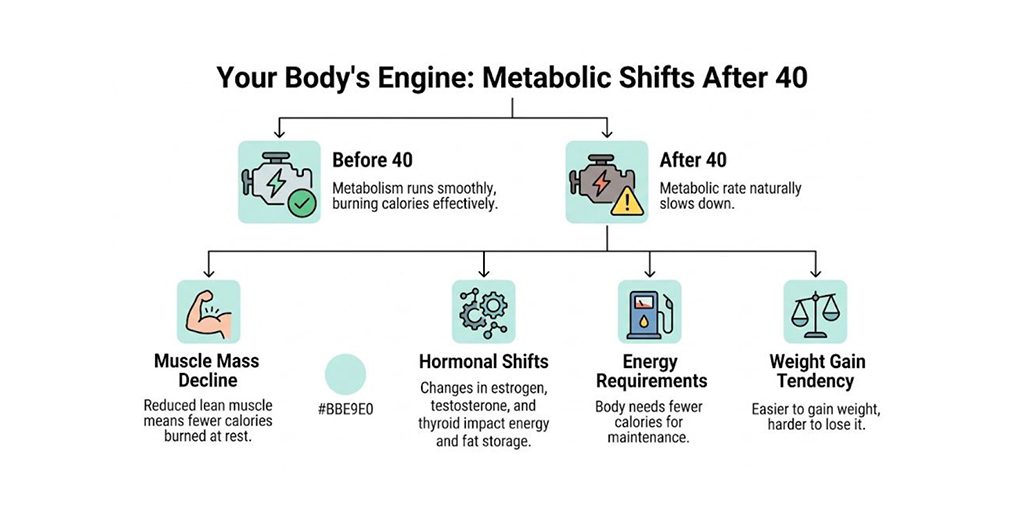
A useful way to picture metabolism is to regard it as your body’s engine. When the engine is strong and efficient, it burns fuel smoothly, even when you’re not doing much. Over time, that engine can become less efficient, especially if you lose the tissue that does most of the calorie burning.
That tissue is muscle.
Muscle loss changes the math
Starting around age 30, adults experience sarcopenia, the age-related loss of muscle mass. Without intervention, women and men lose 3 to 8% of muscle mass per decade, and that cumulative loss can slow metabolism by 5 to 10% by age 40 compared to age 20, according to Franciscan Health’s explanation of weight loss changes after 40. The same source notes that people lose about 0.5 pounds of muscle yearly if they don’t maintain it.
Muscle is metabolically active tissue. In plain language, muscle costs your body more energy to keep around than fat does. So when muscle mass drops, your resting metabolic rate usually drops with it.
That’s one reason someone can be eating “normally” and still gain weight over time. Their body may need fewer calories than it used to, even if their routine feels familiar.
Why cardio alone often stops working
Many people respond to weight gain by adding more cardio and eating less. That can help in some situations, but it doesn’t directly solve the muscle problem. If the plan creates more fatigue than strength, it can even make it harder to preserve lean mass.
A more effective approach usually includes resistance training and enough protein to support muscle maintenance. If you want a practical breakdown, this guide on ways to boost metabolism naturally explains the habits that support metabolic health in real life.
Here’s the key shift in thinking:
- Your goal isn’t only to burn calories during exercise
- Your goal is to keep the calorie-burning engine stronger all day
- That means protecting and rebuilding muscle
A slower metabolism after 40 usually isn’t one dramatic event. It’s the accumulated effect of small losses in muscle, movement, and recovery.
What this feels like day to day
This change often shows up in subtle ways before it shows up on the scale.
You may notice that maintenance takes more effort. A weekend of less structure hits harder than it used to. A diet that worked ten years ago now produces fatigue, hunger, and little visible progress. None of that means your body is broken. It means your body has different operating conditions now.
Once people understand that point, they usually stop chasing punishing fixes and start focusing on what supports metabolism: strength work, recovery, and nutrition that preserves lean mass instead of draining it.
Understanding Hormonal Headwinds in Midlife
Muscle loss is one part of the story. Hormones are another.
After 40, many adults hit a phase where their internal signals around blood sugar, fat storage, stress, and energy become less forgiving. That’s especially true during perimenopause and menopause, but men also experience meaningful hormonal changes that can affect body composition and weight.
Estrogen and insulin sensitivity
One of the biggest sources of confusion is insulin resistance. The term sounds technical, but the idea is simple. Insulin helps move glucose out of the bloodstream and into cells to be used for energy. When the body becomes less sensitive to insulin, it has a harder time handling carbohydrates efficiently.
For many women after 40, declining estrogen plays a major role. The Nutrition Clinic’s discussion of fat loss after 40 notes that declining estrogen may reduce insulin sensitivity by 30 to 50%, which can push the body to store more carbohydrates as abdominal fat.
That helps explain a frustrating pattern people often describe: “I’m not eating that differently, but everything seems to go to my midsection.”
It’s not your imagination. The body’s fuel-handling system may be shifting.
Cortisol and stress storage
Stress matters more than many people realize. Not because stress automatically causes weight gain, but because chronic stress changes the hormonal environment that weight loss depends on.
When cortisol levels remain high, the body tends to prioritize survival over fat loss. That can mean more belly fat storage, worse cravings, and a harder time preserving muscle. It also makes consistent healthy choices tougher because you’re not just hungry, you’re stressed and tired at the same time.
A lot of midlife adults live in exactly that state. They’re working, caregiving, solving everyone else’s problems, and trying to squeeze in wellness around the edges.
Your body doesn’t read stress as “I have a busy inbox.” It reads stress as a signal to conserve energy and stay alert.
Testosterone matters too
Hormonal headwinds aren’t only a women’s issue. Men also see shifts that affect muscle, energy, and fat distribution as they age. Lower testosterone can make it harder to maintain lean mass, which loops back into the metabolism changes covered earlier.
Women feel this too, even though the conversation often centers on estrogen. When anabolic signals drop, building and keeping muscle usually gets harder. That can show up as lower exercise tolerance, slower recovery, and a softer body composition even if body weight hasn’t changed much.
Why standard dieting can miss the real problem
This is the point where a lot of people get stuck. They assume they need more discipline, when what they need is a strategy that accounts for blood sugar, muscle preservation, stress load, and hormone-related shifts in fat storage.
That doesn’t mean hormones make weight loss impossible. It means a generic plan may no longer be specific enough.
A person dealing with insulin resistance, high stress, poor sleep, and changing sex hormones won’t always respond well to a simple “cut calories and do more cardio” formula. They often need a plan built around stable meals, strength training, recovery, and in some cases, medical support that targets appetite regulation or metabolic resistance more directly.
The Impact of Stress Sleep and Daily Life
If metabolism and hormones set the stage, daily life often amplifies the problem.
Most adults don’t hit 40 with more free time, less stress, and better sleep. They usually hit it with the opposite. Their schedule gets tighter, their recovery gets patchier, and their habits become more reactive. That doesn’t just affect consistency. It affects biology.

Sleep changes appetite
Poor sleep doesn’t only make you tired. It can change how hungry you feel and how satisfied you feel after eating.
Research highlighted by Midi Health on weight changes after 40 notes that chronic sleep disruption can raise ghrelin, the hunger hormone, and lower leptin, the fullness hormone. That shift can increase daily caloric intake by 300 to 500 calories without the person being consciously aware of it.
That’s why someone can swear they’re “not eating much more” and still struggle. Sleep debt can subtly increase portion size, snacking, and cravings.
Stress and decision fatigue pile on
Even motivated people make different food choices when they’re drained. They skip meals, then overeat later. They intend to cook, then order takeout after a long day. They stop lifting weights because cardio feels simpler to squeeze in, even if it’s not the most useful tool.
Biology and lifestyle form a loop:
- Poor sleep increases hunger and lowers restraint
- High stress makes comfort eating more appealing
- Low recovery reduces workout quality
- Busy schedules cut into meal prep and movement
The result isn’t a single bad choice. It’s a system that keeps nudging you toward weight maintenance or weight gain.
For a practical look at this connection, this article on sleep, stress, and weight loss breaks down why better recovery often improves more than energy alone.
Small disruptions repeated daily can overpower a good plan. That’s why “I know what to do” and “I can get results” aren’t always the same thing after 40.
Daily movement often falls without notice
There’s another subtle factor. Many people move less in midlife even if they still exercise.
They may sit longer for work, outsource fewer active chores to convenience, or spend more time driving between commitments. So they still count a workout, but the rest of the day becomes more sedentary. That means fewer total calories burned and often less muscle stimulation overall.
This is one reason weight loss after 40 often responds well to simple daily structure:
- Regular meal timing
- More walking between tasks
- A consistent sleep window
- Strength sessions scheduled like appointments
Those aren’t glamorous fixes. They are effective because they stabilize the environment your body is responding to.
Moving Past Outdated Weight Loss Advice
A lot of weight loss advice still treats every adult body the same. That’s a problem.
If you’re over 40, the old formulas can create more frustration than progress. They often ignore muscle preservation, hormone-related appetite changes, and the reality that a stressed, sleep-deprived body won’t respond the same way as a well-rested one.
Here’s a cleaner way to sort the noise.
Weight Loss After 40 Myth vs. Reality
| Common Myth | Science-Backed Reality |
| Just eat a lot less | Aggressive restriction can backfire by increasing hunger, draining energy, and making it harder to stick with the plan |
| More cardio is always the answer | Resistance training matters because muscle helps support resting metabolism |
| If the scale isn’t moving, you’re not trying hard enough | Midlife biology can change appetite, recovery, and fat storage even when effort is high |
| Belly fat means you lack willpower | Abdominal fat storage often becomes more common with hormonal and metabolic shifts |
| Medication is cheating | For some people, medically supervised treatment is simply one tool used when lifestyle work alone isn’t enough |
| If you’re healthy, there’s no reason to get labs checked | Persistent stalls, fatigue, or unexplained gain can justify medical evaluation |
The better questions to ask
Instead of asking “How can I punish this weight off?” ask better questions:
- Am I eating enough protein to support muscle?
- Am I strength training consistently enough to maintain lean mass?
- Is poor sleep driving hunger more than I realize?
- Could stress be pushing my habits off course every evening?
- Do I need a medical workup instead of another generic diet?
That shift matters because it replaces guilt with diagnosis.
The most helpful plan after 40 is usually the one that matches your biology, not the one that sounds the toughest.
There’s still room for discipline. But discipline works best when it’s aimed at the right target. If the issue is muscle loss, insulin resistance, poor sleep, or an untreated medical condition, then “try harder” is incomplete advice.
A Modern Toolkit for Weight Loss After 40
The most effective plans after 40 usually have two layers. First, they build a strong foundation with food, training, sleep, and stress management. Second, when progress remains unusually difficult, they add medical evaluation and supervised therapies that match the biology involved.
That combination is designed to fit real life. It supports quick wins, long-term value, and a plan that’s safe, reliable, and designed for consistency.
Start with the non-negotiables
The basics still matter. They just need to be smarter than the old “eat less, exercise more” script.
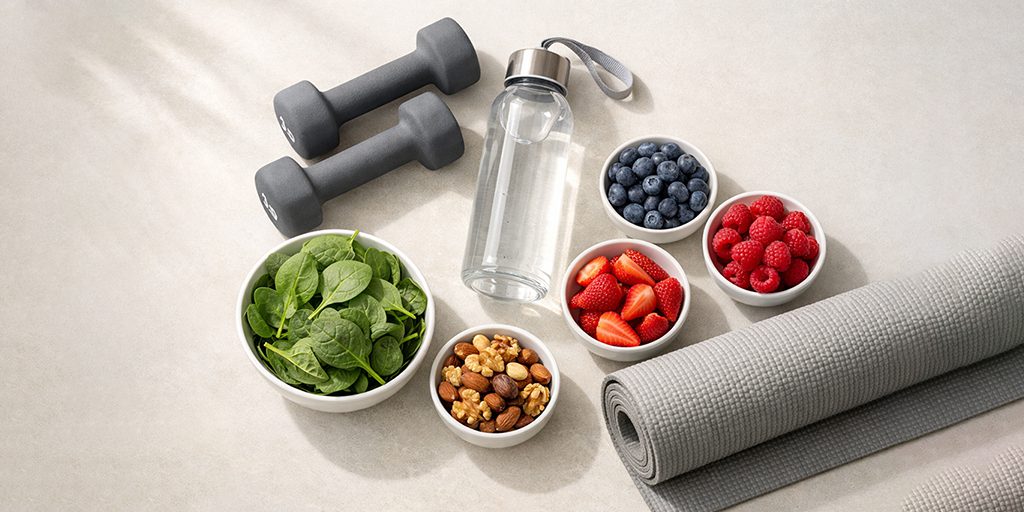
A practical foundation often looks like this:
- Protein-forward meals
After 40, preserving muscle becomes more important. That usually means making protein a visible part of each meal instead of an afterthought. - Strength training as a core habit
Walking is excellent for health, but it doesn’t replace resistance work. Lifting weights, using resistance bands, or doing structured bodyweight training helps maintain lean mass. If you want ideas, this guide on strength training for weight loss offers useful starting points. - Sleep protection
If sleep is fragmented, hunger and cravings often rise. A realistic sleep routine can do more for appetite control than another round of food rules. - Stress reduction that fits your schedule This doesn’t need to mean a perfect meditation practice. It can mean a short walk after dinner, fewer late-night work sessions, or a consistent wind-down routine.
When to look beyond lifestyle alone
Sometimes someone is doing many things right and still feels stuck. That’s the moment to consider whether a medical issue is contributing.
WebMD’s overview of weight loss barriers after 40 notes that hypothyroidism affects about 5% of people and can cause unexplained weight gain and fatigue, especially in women over 40. If symptoms persist, a thyroid evaluation is a reasonable next step.
That matters because not every plateau is a habits problem. Sometimes it’s a screening problem.
Signs that justify a closer look include:
- Persistent fatigue
- Weight gain that feels disproportionate to your habits
- Repeated stalls despite consistent effort
- Cold intolerance, low mood, or other symptoms that seem off
A medical workup can help rule out issues that no macro calculator can solve.
Where GLP-1s and peptides fit
Interest in GLP-1s has grown because they address some of the exact barriers that make weight loss harder in midlife, especially appetite regulation and blood sugar control. For the right patient, a GLP-1 may help reduce constant food noise and support a more manageable calorie intake.
That doesn’t replace good habits. It can make good habits easier to follow.
Here’s a brief explainer on modern options and how they’re used in supervised care:
Lorem ipsum dolor sit amet, consectetur adipiscing elit, sed Peptide-based support also enters the conversation for some adults focused on body composition and healthy aging. For example, Sermorelin supports natural HGH release, which may be relevant in plans that prioritize recovery and muscle preservation. NAD+ plays a key role in cellular energy production, so it’s often discussed in the context of energy support and metabolic health.
The key point is not that everyone needs medication or peptides. They don’t. The key point is that some people benefit from a next-level option when biology is creating more resistance than lifestyle changes alone can overcome.
do eiusmod tempor incididunt ut labore et dolore magna aliqua.
The best plans are personalized
A modern toolkit works best when it answers the true question behind the stall.
For one person, the bottleneck is low protein and no resistance training. For another, it’s sleep disruption and stress eating. For someone else, it may be thyroid dysfunction, insulin resistance, or a level of appetite dysregulation that makes adherence unusually hard.
That’s why personalization matters. It lets you stop guessing.
How to Create Your Personalized Action Plan
If you’ve been wondering why is it hard to lose weight after 40, the answer is rarely one thing. It’s usually a mix of metabolic change, hormonal headwinds, recovery problems, and modern-life pressure.
The good news is that this also points to a practical action plan.
Start with a short self-check
Ask yourself these questions:
- Am I doing any form of regular resistance training?
- Does each meal include enough protein to support muscle?
- Is my sleep disrupted often enough that hunger feels harder to manage?
- Do stress and schedule pressure push me into reactive eating?
- Have I ruled out medical issues if my progress feels unusually stalled?
If several answers point to weak foundations, start there. Tighten your meals, prioritize protein, add strength work, protect sleep, and build a routine you can repeat on busy weeks, not just ideal ones.
Know when to ask for help
If your habits are solid and progress still feels out of proportion to your effort, it may be time to speak with a licensed medical provider. That doesn’t mean you’ve run out of options. It means you’re using a smarter filter.
Progress after 40 usually comes from precision, not punishment.
A confidential telehealth consultation can help you sort out what’s driving the stall, whether that means adjusting your nutrition and training, checking thyroid function, or discussing medically supervised options that support appetite, blood sugar, or body composition.
Frequently Asked Questions
Is weight loss after 40 still possible without medication
Yes. Many people lose weight after 40 with consistent nutrition, strength training, better sleep, and stress management. Medication isn’t a requirement. It becomes a consideration when those basics are in place and the body still shows strong resistance.
Is it harder for women than men
It can be, especially during perimenopause and menopause because hormone shifts can affect insulin sensitivity, fat distribution, sleep, and appetite. Men also face age-related changes, especially around muscle and hormone levels, so both sexes can struggle, just in somewhat different ways.
Why does belly fat seem more stubborn after 40
Midlife changes often shift fat storage toward the abdomen. That can be related to changes in insulin sensitivity, estrogen, cortisol, and muscle mass. So the issue isn’t just eating too much. It’s often where the body has become more likely to store energy.
When should I suspect a thyroid issue
If you have unexplained weight gain, persistent fatigue, and a weight-loss stall that doesn’t match your effort, a thyroid evaluation is worth discussing with a medical provider. This is especially relevant if the slowdown feels sudden or comes with other symptoms that seem unusual for you.
Are GLP-1s only for people with severe obesity
No. Whether a GLP-1 is appropriate depends on your health history, goals, and a provider’s judgment. They’re one option within medically supervised care, not a universal solution.
Disclaimer: TRAVA is not affiliated with, Mounjaro, Ozempic, Rybelsus, Saxenda, Trulicity, Wegovy, or Zepbound. However, we do offer alternatives such as Semaglutide and Tirzepatide. Before beginning any treatment, it's essential to consult with a licensed healthcare provider to ensure the best approach for your individual health needs.