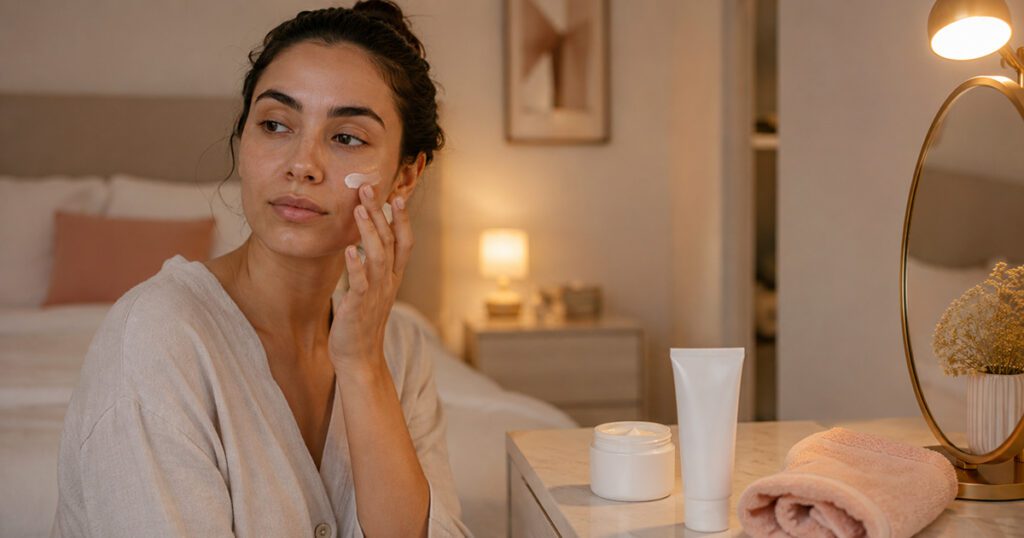
If you are considering prescription skincare for acne, uneven texture, or visible signs of aging, Tretinoin 101: Before Starting Prescription Skincare: What to Know can help you understand what to expect before you begin. Tretinoin can be a useful part of a provider-guided skincare plan, but it requires patience, consistent sun protection, and a routine that supports rather than overwhelms your skin.
Quick Answer
Before starting tretinoin, know that it is a prescription retinoid that can be used for acne and certain signs of skin aging, but results develop gradually. Dryness, redness, peeling, and irritation can occur, especially early in treatment. Provider guidance matters because your strength, application schedule, other skincare products, and individual skin needs can affect how well you tolerate treatment. Daily sun protection is also an important part of a tretinoin routine.
Key Takeaways
- Tretinoin is a prescription retinoid commonly used in acne treatment and certain skincare plans focused on fine lines and skin renewal.
- Improvement is usually gradual. Think in terms of weeks to months rather than overnight changes.
- Dryness, redness, peeling, stinging, and irritation are among the side effects that may occur, particularly when beginning treatment.
- Using more tretinoin than prescribed is not a shortcut to faster results and may increase irritation.
- Moisturizer and consistent sunscreen can be important parts of a tretinoin-friendly skincare routine.
- A licensed healthcare provider can help determine whether tretinoin fits your skin concerns, medical history, current products, and overall treatment goals.
Personalized Compounded Tretinoin
Looking for anti-aging solutions? Start your free assessment now!
Why Tretinoin 101: Before Starting Prescription Skincare Matters
Tretinoin is not simply a stronger version of a typical cosmetic face cream. It is a prescription medication in the retinoid family.
Retinoids affect how skin cells renew and can help keep pores from becoming clogged, which is one reason topical retinoids are included in acne treatment plans. Tretinoin is also used in some prescription skincare plans addressing fine wrinkles and other visible signs of skin aging.
Because tretinoin changes the way your skin behaves, starting treatment often requires adjustments to the rest of your routine. Products that were comfortable before tretinoin may suddenly feel irritating, and using too many active ingredients at the same time can make it difficult to tell what your skin is reacting to.
Understanding this before you start can make the process much easier to navigate.
What Is Tretinoin?
Tretinoin is a topical prescription retinoid. Retinoids are compounds related to vitamin A and are commonly used in dermatology and prescription skincare.
For acne, tretinoin can help prevent pores from becoming clogged as part of an overall treatment plan. It may also be prescribed for certain concerns involving fine wrinkles and skin appearance.
Tretinoin comes in different formulations and strengths. The best option for one person may not be appropriate for another, which is one reason prescription treatment should begin with a licensed healthcare provider rather than simply choosing the strongest product available.
Tretinoin vs. over-the-counter retinol
Tretinoin and retinol are both retinoids, but they are not interchangeable.
Retinol is available in many nonprescription cosmetic products. Tretinoin is a prescription medication and is generally used under medical guidance. A provider can help determine which approach makes sense based on the condition of your skin, your goals, and your ability to tolerate retinoids.

Who May Be a Good Candidate for Tretinoin?
Adults may ask a provider about tretinoin for concerns such as acne, uneven-looking texture, fine lines, or a prescription-based skin renewal routine.
Being interested in those goals does not automatically mean tretinoin is the right choice.
Your provider may consider factors such as:
- Your primary skin concern
- Your current level of dryness, redness, or sensitivity
- History of eczema or other skin conditions
- Current prescription and over-the-counter skincare products
- Other medications or treatments you use
- Previous reactions to retinoids
- Pregnancy, plans for pregnancy, or breastfeeding
People with significant skin irritation, certain inflammatory skin conditions, or a history of poor retinoid tolerance may require a different approach or a carefully adjusted treatment plan. Pregnancy and breastfeeding should also be discussed with a healthcare provider before using tretinoin.
How Tretinoin May Fit Into Provider-Guided Wellness
Prescription skincare works best when the medication is treated as one part of a larger routine rather than the entire routine.
Provider-guided care may include choosing an appropriate tretinoin formulation, explaining how often to use it, reviewing other skincare products, monitoring irritation, and adjusting treatment when necessary.
TRAVA is a modern telehealth and wellness brand focused on provider-guided support. Telehealth allows eligible patients to connect with licensed healthcare professionals remotely for evaluation and treatment planning when appropriate.
The goal is not simply to obtain a prescription. It is to understand how the prescription fits into your individual skincare routine and what to do when questions or side effects arise.
Tretinoin 101: Before Starting Prescription Skincare Checklist
Before applying your first dose, it helps to take a closer look at the products and habits already in your routine.
| What to Review | Why It Matters |
|---|---|
| Cleanser | Harsh or abrasive cleansers may add to irritation |
| Moisturizer | Moisturizing can help support skin experiencing dryness from acne treatments |
| Exfoliating products | Multiple strong active ingredients may be difficult for beginners to tolerate |
| Acne treatments | Ingredients such as benzoyl peroxide or salicylic acid should be reviewed with your provider |
| Sunscreen | Daily sun protection is especially important when using a topical retinoid |
| Other prescriptions | Your provider should know about medications and topical treatments you already use |
| Skin conditions | Eczema, significant redness, irritation, or other concerns may change your treatment plan |
MedlinePlus advises patients to tell their healthcare provider about other topical medications and skincare treatments before beginning tretinoin.
What Should Beginners Avoid With Tretinoin?
A common beginner mistake is trying to change an entire skincare routine at the same time.
Tretinoin itself may cause dryness or irritation, so adding several exfoliating acids, scrubs, peels, or other strong active ingredients can make your skin harder to manage.
Instead, your provider may recommend keeping the rest of your routine relatively simple while you determine how your skin responds.
Avoid applying more than prescribed
More tretinoin does not necessarily mean better or faster results. MedlinePlus advises using tretinoin exactly as directed rather than using larger amounts or applying it more frequently than prescribed.
Be cautious with exfoliation
Abrasive scrubs, strong exfoliating acids, drying toners, and other irritating products may be difficult to tolerate when your skin is adjusting to tretinoin.
That does not mean every active ingredient must be permanently removed from your routine. Ask your provider what can be used, when it can be used, and whether certain products should be introduced later.
Do not ignore persistent irritation
Some dryness or peeling can occur, but severe or ongoing irritation should not simply be viewed as something you have to tolerate.
Contact your healthcare provider if you experience significant discomfort, persistent redness, swelling, blistering, rash, or another reaction that concerns you.
What Side Effects Can Happen With Tretinoin?
Common tretinoin side effects can include:
- Dryness
- Peeling or flaky skin
- Redness
- Itching
- Burning or stinging
- Irritation in the treated area
These reactions can vary considerably from person to person.
The goal of treatment is not to make your skin as irritated as possible. Significant irritation does not automatically mean a product is working better.
Your provider may adjust how frequently you use tretinoin, how much you apply, or how your moisturizer fits into your routine. The American Academy of Dermatology notes that strategies such as using a smaller amount, reducing frequency, or using moisturizer may help some patients tolerate topical retinoids, but these changes should be made with appropriate guidance.
How Long Does Tretinoin Take to Work?
Tretinoin requires patience.
Acne improvement may begin after several weeks of regular use, while changes involving fine wrinkles and other appearance-related goals may take several months. Individual experiences vary, and early irritation or temporary worsening of acne can occur in some people.
This is one reason it is helpful to establish expectations before treatment begins.
Instead of evaluating tretinoin after a few applications, talk with your provider about what timeline makes sense for your specific treatment goal and when your progress should be reassessed.
Why Does Sunscreen Matter With Tretinoin?
Sun protection is a key part of a tretinoin skincare routine.
The American Academy of Dermatology recommends protecting skin from the sun while using topical retinoids, including seeking shade, wearing protective clothing, and using a broad-spectrum, water-resistant sunscreen with SPF 30 or higher.
Sunscreen is especially important because protecting your skin from ultraviolet exposure supports the broader goals of a skincare routine focused on healthy-looking texture and signs of aging.
Think of sunscreen as part of the treatment plan, not an optional extra.
Supporting Your Skin Barrier While Using Tretinoin
A good tretinoin routine does not have to contain a long list of products.
For many people, a simple routine built around cleansing, moisturizing, prescription treatment, and sun protection is easier to manage.
Moisturizer can be particularly helpful because topical acne treatments such as tretinoin may cause dryness and irritation. The American Academy of Dermatology notes that daily moisturizer can help skin tolerate these treatments.
Your provider can also help you decide how to sequence your moisturizer and tretinoin based on your skin.
Questions to Ask Your Provider
Before starting prescription tretinoin, consider asking:
- Am I a good candidate for tretinoin based on my skin and medical history?
- What strength and formulation are you recommending, and why?
- How frequently should I use tretinoin when I first start?
- Which products in my current skincare routine should I continue, stop, or modify?
- What level of dryness or irritation is expected, and when should I contact you?
- How long should I use tretinoin before we evaluate my progress?
- What sunscreen and moisturizing habits should support my treatment plan?
Bringing your current skincare products or a list of active ingredients to your consultation can also help your provider understand what your skin is already exposed to.
FAQs
Can tretinoin help with adult acne?
Tretinoin is one of the prescription topical retinoids used in acne treatment. It can help keep pores from becoming clogged and may be used alone or as part of a broader acne treatment plan. Whether it is appropriate for your adult acne depends on factors such as acne type, skin sensitivity, other treatments, and medical history.
How long does tretinoin take to work?
Tretinoin generally works gradually. Acne improvement may begin after several weeks, while some appearance-related changes may take several months. Your timeline may vary depending on your treatment goal, formulation, consistency, and individual skin response.
Is peeling normal when starting tretinoin?
Dryness, redness, peeling, burning, and stinging are known potential side effects of topical tretinoin. Mild irritation may occur as your skin adjusts, but severe, painful, or persistent irritation should be discussed with your healthcare provider rather than ignored.
Can I use other skincare actives with tretinoin?
Possibly, but combining products should be done thoughtfully. Some acne treatments, exfoliating ingredients, or drying products may increase irritation or require changes in timing. Review products containing ingredients such as benzoyl peroxide, salicylic acid, or strong exfoliants with your provider before combining them with tretinoin.
Do I really need sunscreen while using tretinoin?
Yes, sun protection should be considered an important part of a topical retinoid routine. Dermatologists recommend sun-protective habits and broad-spectrum, water-resistant SPF 30 or higher when using a retinoid.
Conclusion
Starting tretinoin is less about finding the strongest prescription and more about finding a routine your skin can tolerate consistently.
Know your treatment goal, simplify your routine when needed, protect your skin from the sun, moisturize appropriately, and give the process time. Most importantly, use your healthcare provider as a resource when irritation, other skincare products, or treatment expectations raise questions.
For adults interested in prescription skincare for acne, skin texture, or visible signs of aging, TRAVA offers provider-guided prescription skincare options designed around individual evaluation and ongoing support. Explore TRAVA's prescription skincare options to learn whether tretinoin may be appropriate for your skincare goals.
Disclaimer: TRAVA is not affiliated with, Mounjaro, Ozempic, Rybelsus, Saxenda, Trulicity, Wegovy, or Zepbound. However, we do offer alternatives such as Semaglutide and Tirzepatide. Before beginning any treatment, it's essential to consult with a licensed healthcare provider to ensure the best approach for your individual health needs.