
Travel, long weekends, and busy schedules can make wellness routines feel difficult to maintain. The good news is that wellness momentum during travel does not require perfection. With flexible habits, simple recovery strategies, and realistic expectations, it is possible to stay consistent without feeling like you need to completely restart after every disruption.
Whether you are traveling for work, taking a vacation, or simply managing a hectic schedule, small habits can help you maintain progress. Hydration, sleep, movement, and flexibility often matter more than trying to follow a perfect routine every day.
Why Wellness Momentum During Travel Matters
Many people assume one trip or one disrupted week completely ruins their progress. In reality, long-term wellness is built through consistency over time, not perfection every single day.
Travel often changes:
- sleep schedules
- eating routines
- hydration habits
- workout consistency
- stress levels
- daily movement
Trying to control every detail while traveling can create unnecessary stress. A more sustainable approach is learning how to stay flexible while maintaining a few foundational habits.
When you focus on maintaining momentum instead of maintaining perfection, it becomes easier to return to your routine after the trip ends.
The Basics That Travel Well: Hydration, Sleep, and Movement
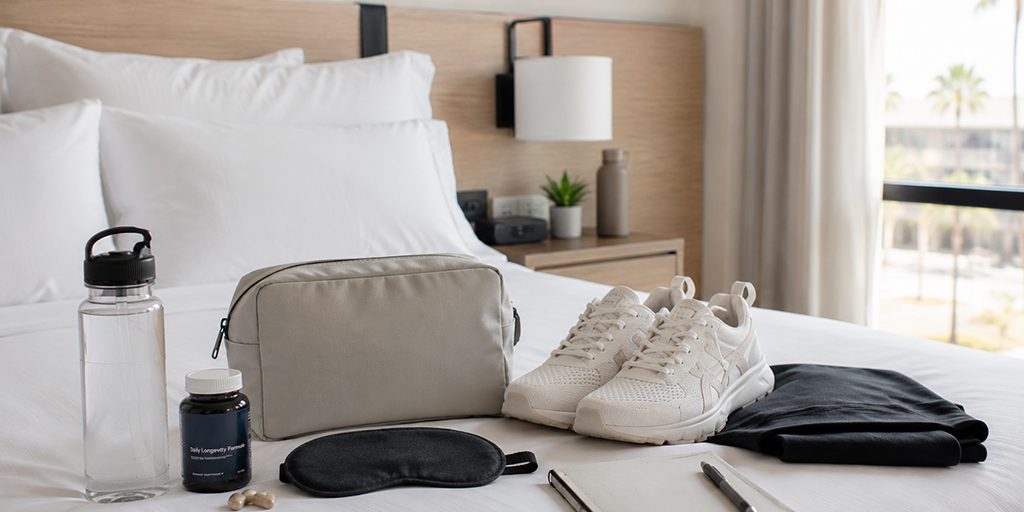
Even when schedules change, a few wellness basics can travel almost anywhere. These simple habits can help support energy, recovery, and overall well-being during busy periods.
Hydration Supports Energy and Recovery
Travel often leads to dehydration without people realizing it. Flights, road trips, hotel stays, heat exposure, alcohol, and inconsistent schedules can all contribute to lower hydration levels.
Staying hydrated may help support:
- energy levels
- physical recovery
- focus and concentration
- digestion
- workout recovery
- overall wellness routines
Simple hydration strategies include:
- carrying a reusable water bottle
- drinking water before caffeine or alcohol
- adding electrolytes during long travel days
- setting reminders to drink water
- increasing water intake during hot weather
Hydration does not need to be complicated. Small adjustments throughout the day can make a noticeable difference.
Sleep Still Matters While Traveling
Travel schedules can easily disrupt sleep quality. Early flights, time changes, unfamiliar environments, and packed itineraries can all affect recovery.
Sleep supports:
- recovery
- mood regulation
- metabolic health
- exercise performance
- appetite regulation
- energy levels
You do not need perfect sleep while traveling. Instead, focus on practical improvements:
- maintain a similar bedtime when possible
- limit heavy meals late at night
- reduce screen time before bed
- stay hydrated throughout the day
- use short walks or sunlight exposure to help regulate your schedule
One poor night of sleep does not erase your progress. The goal is simply supporting recovery as consistently as possible.
Movement Does Not Need to Be Complicated
Many people assume they need full gym workouts to stay on track. During travel, simple movement often works well enough to maintain momentum.
Examples include:
- walking through airports
- hotel gym sessions
- stretching routines
- short bodyweight workouts
- swimming
- sightseeing walks
- taking stairs instead of elevators
A flexible mindset helps people stay consistent longer than an all-or-nothing approach.
Personalized Compounded NAD+
Looking for anti-aging solutions? Start your free assessment now!
Staying Flexible Without Losing Progress
One of the biggest mindset shifts in wellness is understanding that flexibility often creates more long-term consistency than rigidity.
Progress Is Not Destroyed by One Weekend
Many people return from trips feeling discouraged because their routine changed temporarily. This often creates the “start over” mindset.
In reality:
- one vacation does not ruin progress
- one missed workout does not erase consistency
- one weekend of indulgence does not undo long-term habits
Wellness is built through patterns over time. A temporary schedule change is simply part of normal life.
Flexible Routines Are More Sustainable
Rigid wellness plans can become difficult to maintain during real-world situations like:
- travel
- holidays
- family events
- busy work schedules
- unexpected stress
Flexible routines may help people:
- reduce guilt around disruptions
- stay more consistent long term
- maintain realistic expectations
- return to habits more easily
Instead of asking:
“How do I stay perfect while traveling?”
A more useful question may be:
“What habits can I realistically maintain during this season?”
That shift often makes wellness feel more manageable and less stressful.

Wellness Strategies That Work During Busy Schedules
Here are several practical strategies that may help maintain wellness momentum during schedule disruptions.
| Wellness Goal | Flexible Travel-Friendly Strategy |
|---|---|
| Hydration | Carry a refillable water bottle |
| Movement | Walk daily or complete short workouts |
| Sleep Support | Maintain consistent sleep timing when possible |
| Nutrition Awareness | Focus on balance instead of restriction |
| Recovery | Schedule downtime after long travel days |
| Energy Support | Prioritize hydration, sleep, and recovery habits |
Small habits repeated consistently often create more sustainable results than extreme routines.
How to Reset After a Trip
Returning home after travel can feel overwhelming, especially when routines were inconsistent. Instead of trying to immediately “fix” everything, focus on a gradual reset.
Avoid Extreme Compensation
After vacations or travel, many people try:
- extreme dieting
- excessive exercise
- restrictive eating
- punishing workout schedules
This approach often increases stress and makes routines harder to maintain.
A more balanced reset may include:
- returning to regular meal patterns
- improving hydration
- getting adequate sleep
- resuming movement gradually
- focusing on consistency instead of urgency
Recovery Supports Long-Term Consistency
Recovery is often overlooked during busy periods. However, recovery can play an important role in supporting energy, physical performance, and overall wellness routines.
Some individuals explore provider-guided wellness options that may support recovery and energy optimization as part of a broader wellness strategy.
NAD+ and Wellness Support
NAD+ is a naturally occurring coenzyme involved in cellular energy production and metabolic processes. NAD+ levels naturally decline with age, and some people explore NAD+ therapies as part of their wellness and recovery routines.
Provider-guided NAD+ support is often associated with wellness goals such as:
- supporting energy levels
- recovery support
- healthy aging goals
- wellness optimization
- maintaining consistency during stressful schedules
While research is ongoing, NAD+ therapies are typically approached as part of a broader wellness and lifestyle plan guided by licensed medical providers.
Building a Wellness Routine That Fits Real Life
The most sustainable wellness routines are usually the ones that can adapt to real life.
That means understanding:
- schedules change
- routines shift
- travel happens
- stressful periods occur
- perfection is unrealistic
Instead of aiming for perfect consistency, focus on maintaining momentum through adaptable habits.
A few supportive habits repeated regularly can often make a bigger long-term impact than short periods of extreme discipline.
FAQs
How do I stay healthy while traveling?
Focus on simple habits that are easier to maintain during travel. Hydration, sleep, walking, and balanced meals can help support energy and consistency without requiring a perfect routine.
Does missing workouts during a trip ruin progress?
No. Missing a few workouts during travel does not erase long-term progress. Wellness is built over time through overall consistency, not through perfection every day.
What is the best way to reset after vacation?
A gradual reset is often more sustainable than extreme dieting or intense workouts. Returning to regular hydration, sleep, movement, and balanced meals can help support recovery after travel.
Can NAD+ support recovery and energy?
Some people explore provider-guided NAD+ therapies as part of wellness and recovery plans. NAD+ plays a role in cellular energy production, though individual experiences and goals can vary.
Why is flexibility important in wellness?
Flexible routines are often easier to maintain long term. Life includes travel, busy schedules, and unexpected disruptions, so adaptable wellness habits may support better consistency over time.
Conclusion
Travel and schedule disruptions are a normal part of life. Wellness momentum does not depend on maintaining a perfect routine every day. Instead, consistency often comes from flexible habits, realistic expectations, and supportive recovery strategies.
Focusing on hydration, sleep, movement, and gradual resets can help maintain progress without unnecessary stress or guilt.
TRAVA supports wellness through real-life schedule changes with provider-guided options focused on recovery, metabolic health, energy support, and long-term wellness optimization.
Disclaimer: TRAVA is not affiliated with, Mounjaro, Ozempic, Rybelsus, Saxenda, Trulicity, Wegovy, or Zepbound. However, we do offer alternatives such as Semaglutide and Tirzepatide. Before beginning any treatment, it's essential to consult with a licensed healthcare provider to ensure the best approach for your individual health needs.