Starting a GLP-1 medication often changes more than appetite. Many people notice they eat less, feel full faster, and sometimes forget to drink enough water throughout the day. That is one reason why why hydration matters on GLP-1 medications has become such an important topic for people pursuing weight management and metabolic health goals.
While GLP-1 medications can support long-term wellness when used under medical supervision, staying hydrated is an often-overlooked part of the experience. Proper hydration may help support digestion, comfort, kidney health, and overall well-being throughout treatment.
Quick Answer
Hydration matters on GLP-1 medications because these treatments may reduce appetite and thirst while increasing the risk of fluid loss from side effects such as nausea, vomiting, diarrhea, and constipation. Drinking enough water can help support digestion, maintain fluid balance, reduce discomfort, and protect overall health during treatment.
Why This Question Matters
Many people focus on nutrition, dosing schedules, and weight management when starting a GLP-1 medication. However, hydration often receives far less attention.
Current evidence suggests that reduced appetite may lead to lower overall fluid intake. At the same time, some common gastrointestinal side effects can increase fluid loss. Together, these factors may make dehydration more likely if hydration is not prioritized.
Understanding why hydration matters on GLP-1 medications can help patients develop healthy habits that support both comfort and long-term success.
Personalized Compounded GLP-1
Looking for Semaglutide or Tirzepatide? Start your free assessment now!
How GLP-1 Medications Can Affect Hydration
GLP-1 medications work by helping regulate appetite, blood sugar levels, and stomach emptying. These effects can be beneficial for many patients, but they may also influence daily fluid intake.
Many individuals naturally consume less food and fewer beverages once their appetite decreases. Over time, this reduction may contribute to mild dehydration if fluid intake is not maintained intentionally.
Even mild dehydration can affect how people feel throughout the day and may contribute to symptoms such as fatigue, headaches, or dizziness.
Signs of Mild Dehydration
Common signs may include:
- Dry mouth
- Headaches
- Fatigue
- Dizziness
- Dark-colored urine
- Muscle cramps
- Brain fog
- Increased thirst
Recognizing these symptoms early may help prevent more significant hydration issues.
Why Hydration Matters on GLP-1 Medications During Side Effects
One of the biggest reasons hydration matters on GLP-1 medications is the potential for gastrointestinal side effects.
These symptoms are often most noticeable:
- During the first few weeks of treatment
- Following dose increases
- After larger meals
- When fluid intake is already low
Nausea and Vomiting
Nausea is one of the most commonly reported side effects associated with GLP-1 medications. Some people may also experience occasional vomiting.
Both symptoms can make it difficult to maintain adequate hydration. Small, consistent sips of water are often easier to tolerate than drinking large amounts at one time.
Diarrhea
Diarrhea may lead to increased fluid and electrolyte loss.
Electrolytes such as sodium and potassium help support normal fluid balance, nerve signaling, and muscle function. Replacing fluids appropriately becomes increasingly important if diarrhea occurs.
Constipation
Constipation is another common concern among GLP-1 users.
Adequate hydration may help support healthy digestion and bowel regularity. While hydration alone is not always enough to resolve constipation, it is an important part of overall digestive health.
How Hydration Supports Kidney Health
Hydration plays an important role in helping the kidneys perform their normal functions.
The kidneys help filter waste products and regulate fluid balance throughout the body. When dehydration becomes significant, the kidneys may experience additional stress.
Although uncommon, severe dehydration associated with prolonged vomiting or diarrhea has been linked to kidney complications in some cases. Maintaining adequate fluid intake may help reduce this risk.
People Who May Need Additional Hydration Support
Some individuals may be more vulnerable to dehydration, including:
- Older adults
- People with kidney conditions
- Individuals who exercise frequently
- People living in hot or humid climates
- Those taking medications that increase urination
Patients experiencing ongoing symptoms should discuss concerns with their healthcare provider.
How Much Water Should You Drink on GLP-1 Medications?
Hydration needs vary from person to person, but many healthcare providers recommend aiming for approximately 2 to 3 liters of fluids daily. If you have been placed on fluid restrictions by your provider, please seek individualized recommendations prior to making adjustments.
Several factors can influence hydration requirements.
| Factor | Why It Matters |
|---|---|
| Body Size | Larger individuals may require more fluids to maintain proper hydration. |
| Activity Level | Exercise increases sweat and fluid loss, raising hydration needs. |
| Climate | Hot or humid weather can increase fluid loss and hydration requirements. |
| Side Effects | Nausea, vomiting, or diarrhea can increase fluid loss and may require additional hydration. |
| Diet | Higher-protein diets may increase the body's need for water to support normal metabolism. |
Rather than consuming large amounts at once, many people find it easier to drink fluids steadily throughout the day.
Practical Hydration Tips for GLP-1 Users
Hydration does not have to be complicated. Small daily habits can make a meaningful difference.
Carry a Water Bottle
Keeping water nearby serves as a simple reminder to drink consistently throughout the day.
Eat Hydrating Foods
Fluids can come from both beverages and foods.
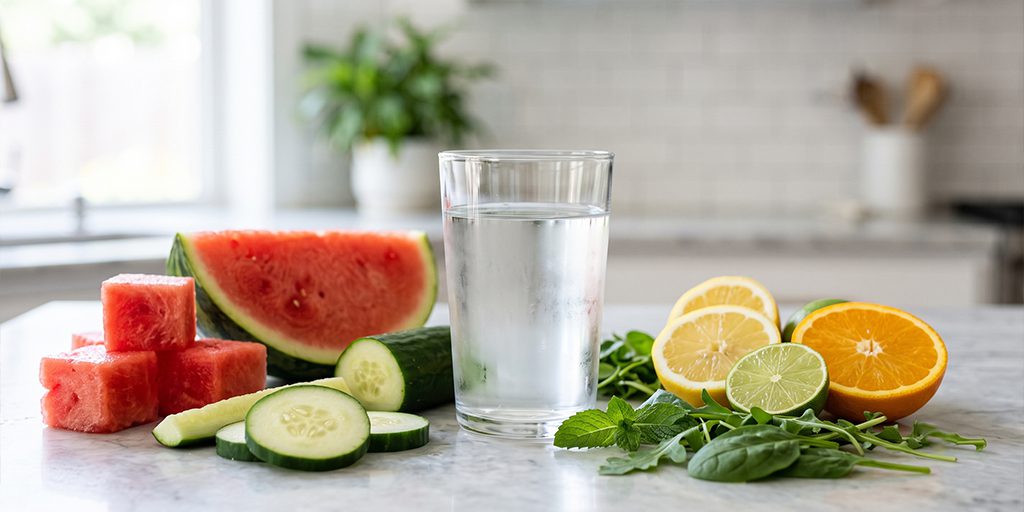
Examples of hydrating foods include:
- Watermelon
- Cucumbers
- Oranges
- Strawberries
- Soups
- Lettuce
- Celery
Consider Electrolytes When Appropriate
Electrolyte beverages may be helpful during periods of increased fluid loss from sweating, vomiting, or diarrhea.
When choosing an electrolyte product, look for options that are not heavily loaded with added sugars. Use caution if you have issues with your blood pressure or heart and discuss this with your provider first.
Sip Throughout the Day
Drinking small amounts regularly may be easier on the stomach than consuming large volumes at one time.
This approach can be especially helpful for people experiencing nausea.
Monitor Urine Color
Urine color can provide a simple hydration check.
Pale yellow urine is generally associated with adequate hydration, while darker urine may indicate the need for additional fluids.

Signs You May Not Be Drinking Enough Water
Dehydration can develop gradually, making it easy to overlook.
Potential signs include:
- Persistent fatigue
- Lightheadedness
- Dry lips or skin
- Headaches
- Constipation
- Reduced urination
- Difficulty concentrating
Anyone experiencing severe or persistent symptoms should seek medical guidance.
Can Coffee and Tea Count Toward Hydration?
Yes. Moderate amounts of coffee and tea can contribute to overall fluid intake.
Although caffeine may increase urination in some individuals, most caffeinated beverages still provide hydration benefits. Water should remain the primary source of daily hydration, but coffee and tea can contribute to overall fluid goals.
Questions to Discuss With Your Provider
If you are taking a GLP-1 medication, consider discussing the following questions with your healthcare provider:
- How much water should I drink based on my health needs?
- Should I use electrolyte supplements?
- What should I do if nausea makes drinking difficult?
- How can I prevent constipation while taking a GLP-1 medication?
- What signs of dehydration should I watch for?
Frequently Asked Questions
Why does hydration matter on GLP-1 medications?
Hydration matters on GLP-1 medications because appetite and thirst may decrease while gastrointestinal side effects can increase fluid loss. Maintaining proper hydration may help support digestion, kidney health, energy levels, and overall comfort throughout treatment.
How much water should I drink while taking GLP-1 medications?
Many adults may benefit from consuming approximately 2 to 3 liters of fluids daily, though individual needs vary. Factors such as activity level, climate, body size, diet, and side effects can influence hydration requirements. A healthcare provider can offer personalized guidance. If you have been placed on fluid restrictions by your provider, please seek individualized recommendations prior to making adjustments.
Can dehydration make GLP-1 side effects worse?
Yes. Dehydration may contribute to symptoms such as fatigue, headaches, dizziness, constipation, and general discomfort. Maintaining consistent fluid intake may help support overall well-being and improve tolerance during treatment.
Are electrolyte drinks helpful while taking GLP-1 medications?
Electrolyte beverages may be beneficial during periods of vomiting, diarrhea, excessive sweating, or reduced food intake. They can help replace fluids and important minerals lost during these situations. Choosing lower-sugar options is often recommended. Use caution if you have issues with your blood pressure or heart and discuss this with your provider first.
What are the most common signs of dehydration?
Common signs include dry mouth, dark urine, headaches, dizziness, fatigue, constipation, muscle cramps, and reduced urination. Persistent or severe symptoms should be evaluated by a healthcare professional.
Final Thoughts
Understanding why hydration matters on GLP-1 medications can help patients navigate treatment more comfortably and confidently. While appetite changes and digestive side effects are common, maintaining healthy hydration habits may support digestion, kidney function, energy levels, and overall wellness.
Simple habits such as carrying a water bottle, drinking consistently throughout the day, and incorporating hydrating foods into meals can make a meaningful difference.
If you are exploring provider-guided wellness options, TRAVA can help you learn more about medically supervised weight management and personalized health support.
Medically Reviewed By: Jonah Mink, MD, Family Physician
This article has been reviewed for medical accuracy by Jonah Mink, MD, Family Physician. The information provided is intended for educational purposes only and should not replace personalized medical advice, diagnosis, or treatment from a qualified healthcare professional.
Disclaimer: TRAVA is not affiliated with, Mounjaro, Ozempic, Rybelsus, Saxenda, Trulicity, Wegovy, or Zepbound. However, we do offer alternatives such as Semaglutide and Tirzepatide. Before beginning any treatment, it's essential to consult with a licensed healthcare provider to ensure the best approach for your individual health needs.